
Process

Four service units that move form toward proof.

Each unit can be requested separately, but the cleanest path usually moves from concept to basic drawings, sample-stage productization review, and mass production.
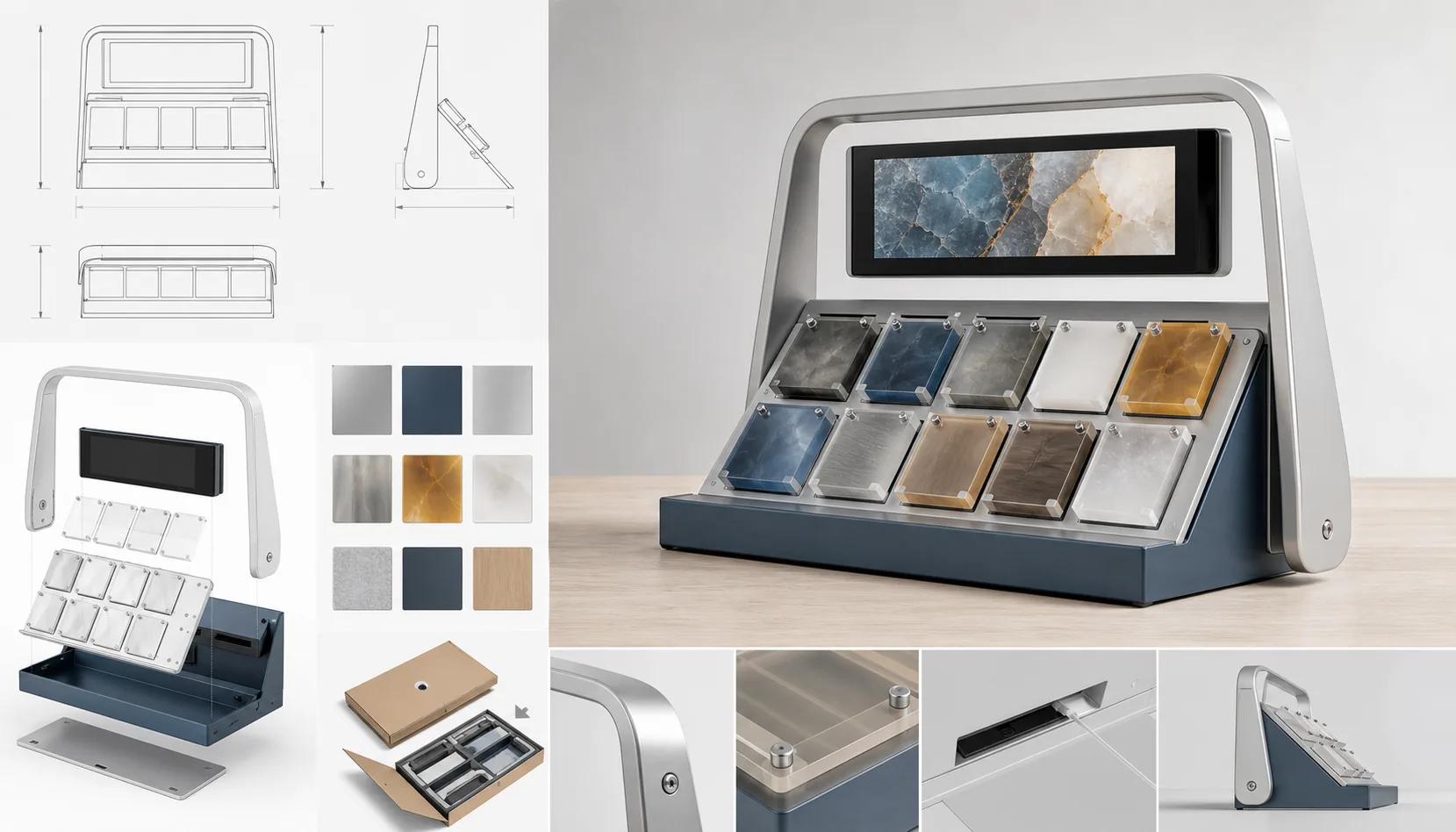
Representative concept board showing a display moving from idea toward a sample
Fictional VMD and experiential retail concept
01

Concept Design

Shape the VMD, POP, POSM, fixture, or product display direction around brand intent, store context, durability, and production feasibility.

View a concept stage
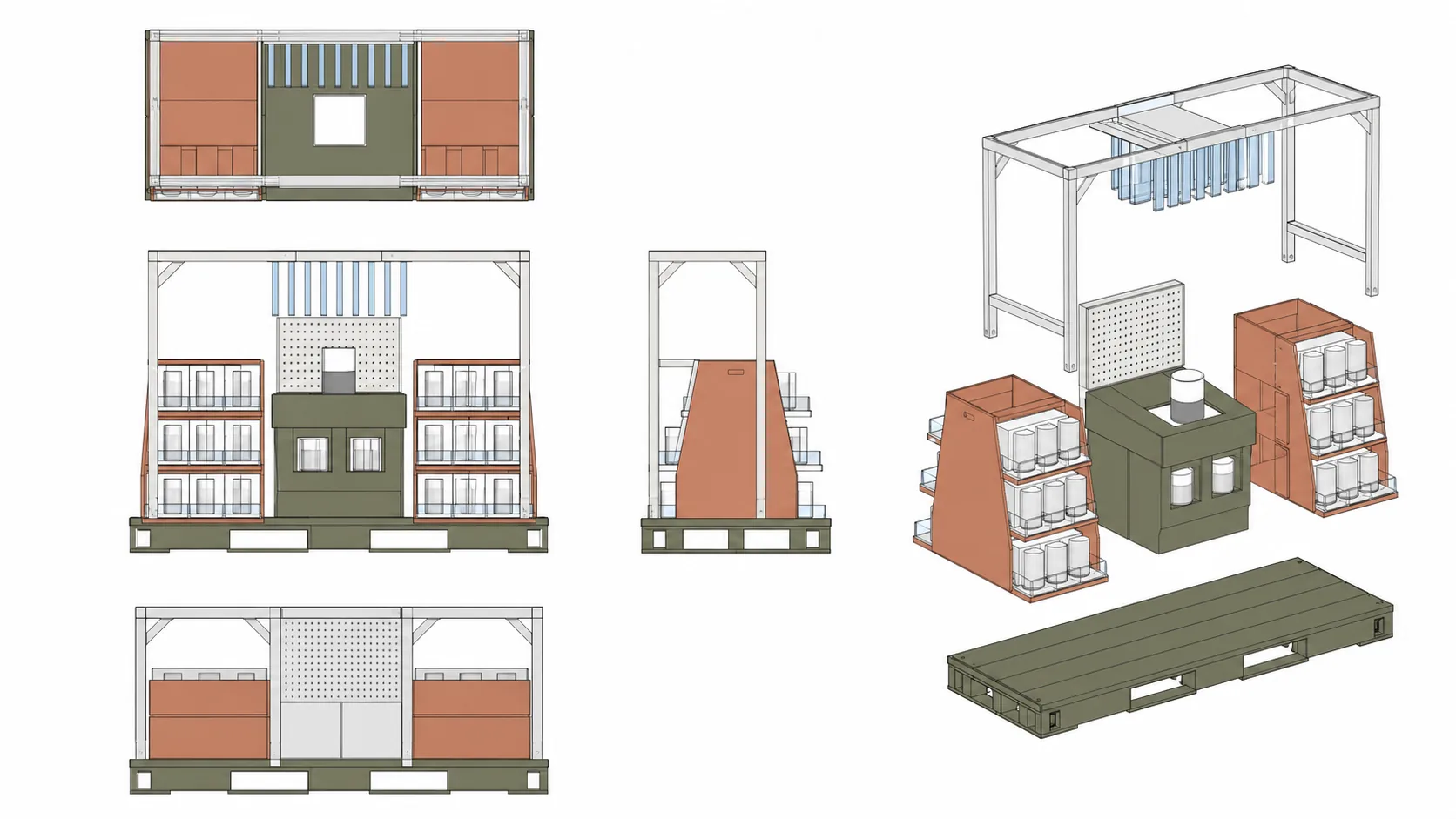
Public-safe basic drawings for a fictional pallet display
02

Basic Drawing Work

Convert the selected direction into basic dimensions, structure, assembly thinking, material assumptions, and review-ready drawing deliverables.

View a drawing stage
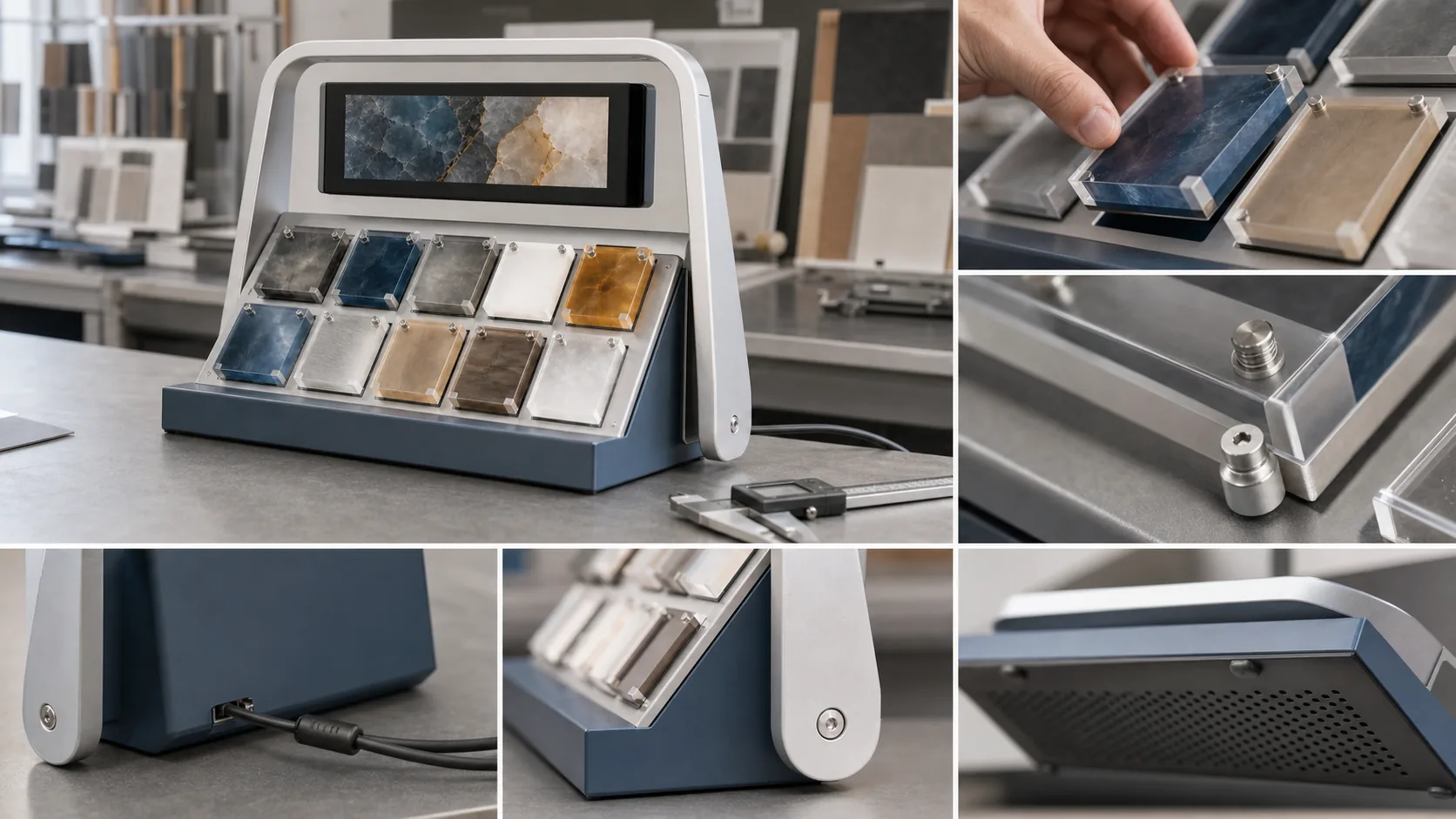
Fictional sample productization and defect-risk review
03

Productization Review, Drawing Revision, and Sample Production

Define defect-prone areas, identify designs that cannot responsibly proceed as drawn, revise the production direction, and produce a sample product for review.

View a productization stage

Fictional modular exhibit shown as an installed production result
04

Mass Production

Coordinate production against the approved sample and current requirements, including critical dimensions, assembly and stability, finish standards, photo-documented QC, pack-out, and shipping readiness.

View an installed result

Technology Project Path

Seven delivery gates coordinate physical, hardware, software, and AI work.

The four service units remain the commercial structure. Technology projects use additional development and approval gates so hardware and software advance together and are validated as one system.

Service units define commissioned scope. Delivery gates define evidence and approval.
01 · Concept DesignT1–T2

Experience, requirements, architecture, and feasibility.

02 · Basic Drawing WorkT3 H/W lane

Physical system, electronics integration, and service engineering.

03 · Productization & SampleT4–T5

Integrated prototype, validation, and pilot evidence.

04 · Mass ProductionT6

Production, provisioning, installation, and launch acceptance.

  1. Delivery gate T1

    Experience & Requirements

    Purpose
    Define what the visitor should do, how the system should respond, and what success means in the intended environment.
    H/W work
    Confirm the site, product handling, reach, fixture context, service constraints, and physical interaction zones.
    S/W & AI work
    Define the interaction flow, approved content and data, accessibility, privacy, human handoff, and measurable outcomes.
    Approval evidence
    Approved requirements baseline, interaction flow, and acceptance criteria.
    Brief this phase
  2. Delivery gate T2

    System Architecture & Feasibility

    Purpose
    Resolve the system boundary before the fixture form, electronics, application, or AI behavior becomes expensive to change.
    H/W work
    Select component classes and define power, thermal, connectivity, mounting, replacement, and make-or-buy assumptions.
    S/W & AI work
    Define application, device, API, content, AI, security, offline, and failure-state architecture.
    Approval evidence
    Approved architecture, interface map, risk register, and proof plan.
    Brief this phase
  3. Delivery gate T3

    Parallel Engineering

    Purpose
    Develop the physical and digital workstreams together against one controlled interface contract.
    H/W work
    Physical & Hardware Engineering: fixture details, electronics, sensors, edge compute, power, ventilation, wiring, and safe service access.
    S/W & AI work
    Software & AI Development: kiosk application, device services, content controls, integrations, approved knowledge, guardrails, telemetry, and offline behavior.
    Approval evidence
    Frozen interface contract, review-ready engineering package, and alpha software release.

    Parallel workstreams: both lanes use one interface contract and converge in T4.

    Brief this phase
  4. Delivery gate T4

    Integrated Prototype

    Purpose
    Bring the fixture, electronics, sensors, application, content, and AI behavior together in one working system.
    H/W work
    Assemble the serviceable prototype and verify power, thermal behavior, sensor placement, access, stability, and replacement paths.
    S/W & AI work
    Integrate the application, device controls, approved knowledge, local fallback, logs, and recovery behavior on representative hardware.
    Approval evidence
    End-to-end demonstration, integration test evidence, and controlled issue list.
    Brief this phase
  5. Delivery gate T5

    Validation & Pilot

    Purpose
    Confirm the integrated system works for its intended users and environment before production release.
    H/W work
    Test function, heat, durability, repeated handling, accessibility, installation, maintenance, transport, and safe recovery.
    S/W & AI work
    Evaluate workflows, offline behavior, updates, security and privacy controls, AI answer quality, refusal, and staff handoff in a one-to-three-unit pilot when appropriate.
    Approval evidence
    Validation report, closed critical findings, and documented go, revise, or stop decision.
    Brief this phase
  6. Delivery gate T6

    Production, Provisioning & Launch

    Purpose
    Create repeatable physical units and a controlled digital release that can be installed and accepted as one system.
    H/W work
    Complete production engineering, electrical assembly, critical-dimension and finish QC, pack-out, spares, and installation preparation.
    S/W & AI work
    Assign device identities, load approved configuration and content, release software, verify connectivity and offline operation, and prepare support tools.
    Approval evidence
    Production baseline, provisioned units, QC evidence, installation kit, and launch acceptance.
    Brief this phase
  7. Delivery gate T7

    Operate & Improve

    Optional care
    Purpose
    Keep connected programs supportable after launch without making ongoing care mandatory for every project.
    H/W work
    Track field service, replacement parts, recurring hardware faults, site changes, and decommissioning needs.
    S/W & AI work
    Manage device health, approved content, OTA releases, rollback, incidents, anonymous analytics, and periodic AI evaluation.
    Approval evidence
    Operations handoff or agreed care plan with ownership, monitoring, release, recovery, and retirement procedures.
    Brief this phase

Cross-cutting assurance · T1–T7

Approved data, privacy, accessibility, human handoff, evaluation evidence, offline behavior, and rollback travel through every gate.

These controls are reviewed throughout the lifecycle rather than postponed to a final AI or software checklist.

Sample-only path

Sample products can support independent production, with clear drawing boundaries.

When Form & Proof creates the basic drawings, those basic drawings can be provided. Drawing revisions created to productize and produce the sample remain Form & Proof production know-how and are not provided; independent mass production should be based on the basic drawings and the approved sample.